Get The Look
-

-
 undefinedundefined$0
 -

-

-


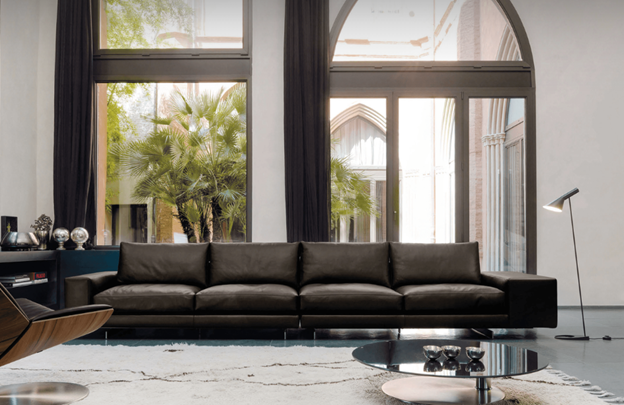
Modern furniture is not merely a design movement, nor is it a passing trend confined to the mid-20th century. It is an ongoing exploration of how we interact with objects and spaces, a philosophy that marries comfort with elegance, and an aesthetic that has continually evolved with the pulse of culture.
As an aesthetic, as a movement, and as a design philosophy, it’s worth exploring the question, “what is modern furniture?” Its impact and how this design aesthetic has shaped the course of luxury interiors and how we think about form and functionality.
The roots of modern furniture stretch back to the early 20th century, when designers began to rebel against the heavy ornamentation of the Victorian and Edwardian eras. Inspired by industrial innovation, Bauhaus philosophy, and a broader cultural desire for clarity after decades of complexity, furniture began to take on a new voice. The language of design was stripped down, emphasizing form, line, and material truth over embellishment.

This moment was not about rejecting beauty necessarily, it was about redefining it. Beauty was no longer measured in how much detail one could carve into a table leg, but in how cleanly and intelligently the table itself could serve its purpose.
Designers like Le Corbusier, Charles and Ray Eames, and Alvar Aalto set the stage for a radical shift: furniture that embraced technology, valued accessibility, and celebrated form as a reflection of life itself.
Over the years, it was actually Italian design that became synonymous with modern luxury through a rare fusion of heritage craftsmanship, cultural artistry, and avant-garde innovation.
Emerging in the postwar decades, Italian furniture makers married centuries-old traditions of woodworking, leatherwork, and metalwork with daring modern forms, creating pieces that felt both timeless and revolutionary.
Unlike other modern movements that emphasized austerity, Italian design embraced sensuality: curves, textures, and rich materials were employed not only for comfort but for drama. This new intentional wave of furniture transformed homes into galleries of living art, where practicality and beauty were inseparable.
Over time, this marriage of technical mastery and aesthetic daring established Italian furniture as the pinnacle of modern luxury, a symbol of taste that transcends fleeting trends and continues to shape the global understanding of what it means to live beautifully.
At the center of modern aesthetics lies a devotion to simplicity, but simplicity of a particular kind: intentional simplicity.
A modern chair is not plain for the sake of being plain; its clean lines and stripped-back silhouette are deliberate, revealing an underlying order that supports both eye and body.
Honesty in materials is equally essential. A wooden chair is celebrated for the grain of its oak or walnut. A steel frame is left exposed, not hidden, because its strength and integrity are part of the beauty. Glass, leather, concrete, and plastic all speak their own languages within modern furniture, and none need to masquerade as something they are not. This transparency fosters a trust between the object and the user.
Though unified in spirit, modern furniture has diversified into a spectrum of aesthetics, each interpreting the philosophy in distinct ways.
Emerging in the 1940s and 50s, mid-century modern design infused modernism with optimism. Organic curves softened the strict lines of Bauhaus, while innovations in manufacturing introduced molded plastic, fiberglass, and plywood. Iconic pieces often combined sculptural elegance with human comfort, reflecting a new era where furniture could be both playful and practical.
Minimalism takes the modern credo of “less is more” to its logical conclusion. Rooms are stripped of all unnecessary decoration, leaving only what is essential. Yet in this restraint lies a heightened sensitivity: every object matters, every angle carries weight. Minimalist modern furniture often appears weightless, with floating shelves, slender frames, and a harmony between negative space and solid form.
Scandinavian design bridges modern simplicity with warmth. Pale woods, cozy textiles, and light-infused interiors create spaces that are not only functional but deeply human.
The philosophy of hygge: comfort, coziness, contentment, is woven into the DNA of this aesthetic. Here, modern furniture elevates daily life not through severity but through softness and care.
Born out of converted warehouses and lofts, industrial modern brings raw materials to the forefront.
Steel beams, reclaimed wood, and exposed brickwork provide a backdrop for furniture that embraces a kind of elevated ruggedness. Heavy dining tables with iron legs, leather sofas with patina, and lighting that recalls factory lamps. Industrial modern is modernism at its most unvarnished—brutal yet striking.
Unlike other strands, contemporary modern is not fixed to one moment in history. It continually adapts, blending modern principles with current innovations. Smart furniture with integrated technology, bold use of color, and hybrid forms that borrow from multiple styles all fall within this category. It is modernism in dialogue with the present moment.
Luxury modern furniture is inseparable from its context. Placement transforms a chair into a focal point, a sofa into an anchor, or a table into a gathering hub. In modern interiors, space is never accidental.
Open floor plans especially thrive with modern furniture. A modern sectional sofa defines a living space without the need for walls. A low-profile credenza stretches along one side, balancing the visual weight of a room. Chairs are not simply arranged for maximum seating but positioned to encourage conversation, to align with sightlines, or to frame architectural views.
Perhaps most importantly, modern design values negative space. The absence of furniture is just as meaningful as its presence. Wide walkways, uncluttered walls, and breathing room around each piece heighten the impact of what remains. Placement, then, becomes a form of choreography, orchestrating how people move, gather, and perceive the space.
Modern furniture is not purely aesthetic, it is philosophical. It embodies a belief that the spaces we inhabit shape our thoughts, emotions, and behaviors. When we sit at a carefully designed desk, our work feels more focused. When we gather around a well-crafted dining table, conversation flows more freely. The very act of using modern furniture invites us to live with greater awareness and presence.
High-quality furniture, in particular, elevates this philosophy. A sturdy oak table that lasts decades does more than serve meals; it becomes a witness to family history, embodying durability and care. An Italian leather chair that ages gracefully reminds us that beauty is not fixed but deepens with time. Modernism resists the disposable and instead champions the enduring.
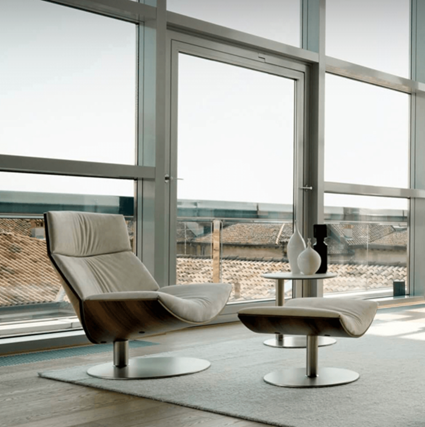
One of modernism’s most radical ideas is that function itself is beautiful. A lamp that directs light precisely where it is needed does not require gilded flourishes to be worthy of admiration. Its efficiency is its art.
In practice, this means modern furniture often surprises in its practicality. Bookshelves double as partitions. Dining tables integrate concealed extensions. These solutions make living easier while enhancing elegance. When form and function meet in perfect balance, a piece feels inevitable, as if it could exist in no other way.
Beyond philosophy and utility lies an emotional truth: modern furniture can transform how we feel. A minimalist bedroom, devoid of clutter, can inspire serenity and rest. A brightly colored mid-century chair can spark playfulness. An industrial dining table, massive and grounding, can create a sense of solidity and permanence.
This emotional aspect arises because modern furniture is not purely about surfaces but about experiences. It does not overwhelm the senses but refines them, providing clarity, balance, and harmony in an often chaotic world.
To elevate a space with modern furniture is to honor both the material and the immaterial. It is to recognize that a home is not only a physical shelter but a stage for memory, creativity, and rest. By choosing furniture that embodies clarity, quality, and grace, one crafts an environment that uplifts rather than confines.
Modern furniture teaches us that beauty and practicality are not opposites but partners. It reminds us that space is not to be filled indiscriminately but shaped thoughtfully.
So, what is modern furniture? It is a continuing conversation between the past and the future, between simplicity and richness, between practicality and beauty. It is an aesthetic that celebrates openness, a philosophy that insists on intentional living, and a practice that transforms ordinary spaces into extraordinary experiences.
In every clean line, every material left bare, and every piece placed with care, modern furniture reveals its essence: to live not with more, but with meaning. If the modern aesthetic inspires you, explore our selection of furniture here at Cantoni. We feature a wide variety of luxury Italian furniture that can accommodate the range of modern aesthetics, to create a balanced and complementary look for your home.